
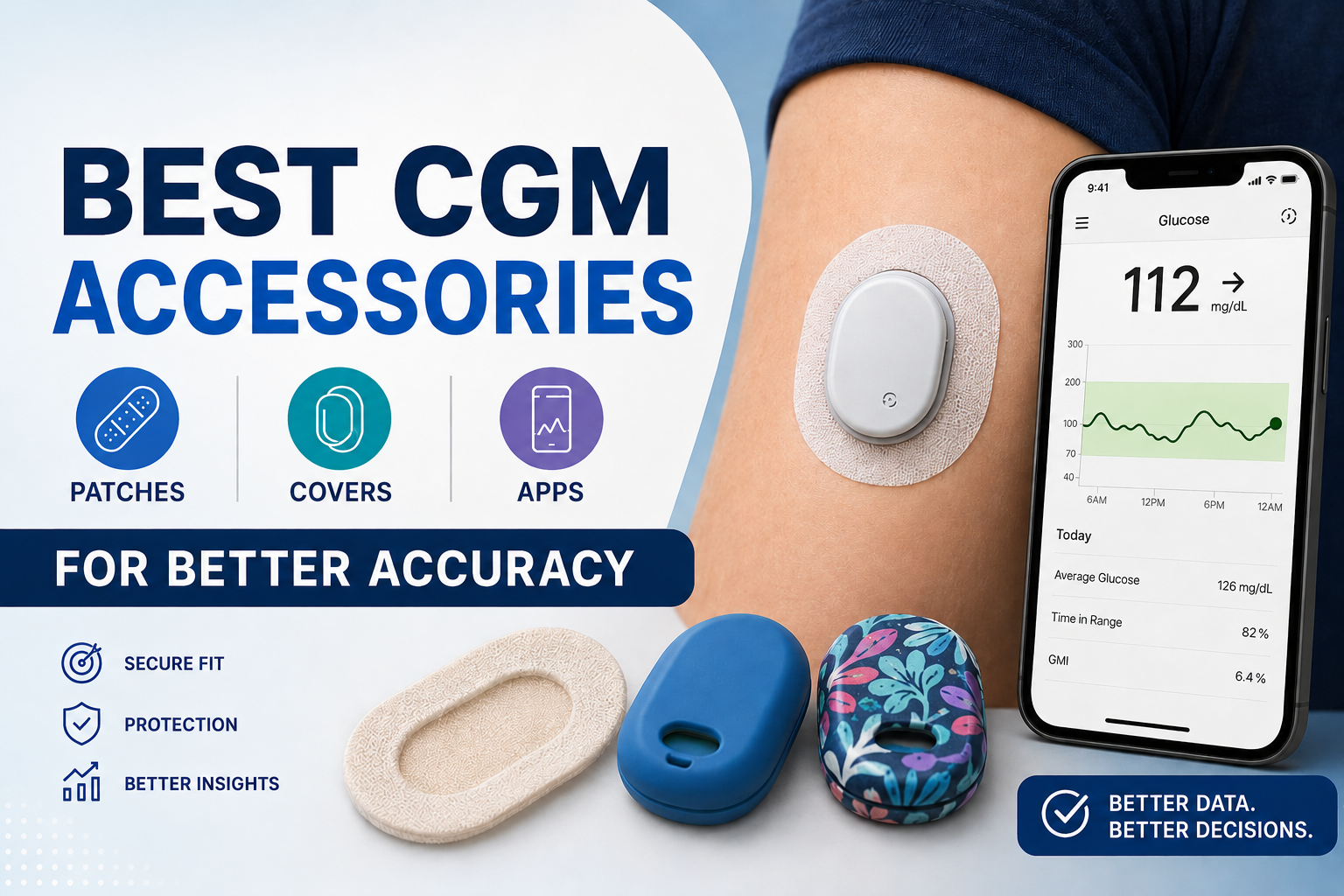
Continuous Glucose Monitoring has become an important part of modern diabetes management. CGM systems help people track glucose trends throughout the day and night without relying only on individual finger-prick checks.
However, getting the most from a CGM involves more than simply applying a sensor. Accessories such as adhesive patches, protective covers, smartphone apps, and carrying solutions can help improve comfort, protect the sensor, and make daily monitoring more convenient.
It is important to understand that most accessories do not directly make the CGM sensor technically more accurate. Their main value is helping the sensor stay securely positioned, preventing accidental knocks, and supporting consistent data access. In 2026, users have more accessory options than ever, but compatibility and correct use remain critical.
Why CGM Accessories Matter
A CGM sensor may remain attached for several days or longer, depending on the system. During that time, it can be exposed to sweat, clothing friction, exercise, showers, sleep movement, and accidental contact.
If a sensor becomes loose or damaged, monitoring may be interrupted.
The right accessory can help:
- Protect the sensor from accidental impact
- Support sensor adhesion
- Reduce edge lifting
- Improve comfort during exercise
- Make sensors easier to manage while travelling
- Keep compatible receivers and supplies organised
For people living with diabetes, small improvements in sensor usability can make daily glucose monitoring feel significantly easier.
1. CGM Adhesive Patches
Adhesive patches, sometimes called overpatches, are among the most popular CGM accessories.
They are designed to fit around or over the sensor adhesive and provide additional support.
Dexcom, for example, includes an overpatch as part of the G7 system and advises users to follow the supplied overpatch instructions.
For FreeStyle Libre 2 plus users, Abbott states that medical-grade adhesive bandage or tape can be used as an over-bandage when applied correctly. The centre opening of the sensor should not be covered.
Benefits of CGM Patches
Patches may be particularly useful for:
- People who exercise frequently
- Users who sweat heavily
- Swimmers
- Children who may accidentally knock sensors
- People whose clothing rubs against the sensor
- Anyone who experiences adhesive edges lifting early
A well-fitted patch may help reduce the chance of the sensor becoming detached before the end of its intended wear period.
2. Protective CGM Covers
A CGM cover is slightly different from an adhesive patch.
Instead of primarily providing extra adhesive support, a protective cover creates a physical barrier around the sensor.
These covers may be useful during activities where the sensor is more likely to be bumped, such as sports, gym workouts, outdoor activities, or physical jobs.
Some covers are designed to be used together with an adhesive patch.
When choosing a cover, make sure it is specifically compatible with your CGM model. A poorly fitting accessory may place unnecessary pressure on the sensor or interfere with normal wear.
3. Official CGM Smartphone Apps
A compatible smartphone app is one of the most useful CGM accessories because it helps users turn glucose readings into meaningful information.
Modern CGM apps can display:
- Current glucose readings
- Trend arrows
- Daily graphs
- High and low alerts
- Time-in-range information
- Historical glucose patterns
- Sensor status
Abbott notes that FreeStyle Libre apps can help users understand how food, medication, and exercise affect glucose and can allow data sharing with healthcare teams or family members when supported.
Dexcom also requires a compatible display device for systems such as the G7, with its app available for supported smartphones.
Using the official app recommended for your CGM is generally the safest starting point.
4. Data-Sharing and Reporting Apps
CGM data becomes more valuable when users can recognise long-term patterns.
Some platforms allow glucose reports to be reviewed over several days or weeks, making it easier to identify recurring highs, lows, or periods of increased variability.
These reports may include:
- Time in range
- Average glucose
- Glucose variability
- Daily patterns
- High and low events
Data-sharing tools can also make conversations with healthcare professionals more productive because decisions can be based on patterns rather than isolated readings.
People with diabetes should ensure any third-party app they use is compatible with their CGM and meets appropriate privacy and security standards.
5. Skin Preparation Products
Proper skin preparation is one of the simplest ways to support sensor adhesion.
Before applying a CGM sensor, the application area should generally be clean and completely dry. Dexcom specifically advises applying the sensor to clean, dry skin and avoiding areas with excessive hair or skin folds.
Skin-preparation products may include:
- Alcohol wipes
- Adhesive wipes
- Skin-safe barrier products
- Adhesive removers
However, users should not automatically place barrier products underneath a sensor unless the manufacturer specifically allows it.
Abbott states that barrier substances or patches placed underneath FreeStyle Libre 3 sensor adhesive have not been tested and advises following the product instructions.
6. Adhesive Removers
Removing a sensor after its wear period can sometimes be uncomfortable, especially if the adhesive is strong.
Adhesive-removal products can help loosen tape and reduce pulling on the skin.
Abbott advises gently peeling the adhesive edge during sensor removal and notes that a soft moisturiser may make removal easier.
Users with sensitive skin should choose skin-compatible products and stop using anything that causes irritation
7. Sensor Carrying Cases
People who travel frequently or carry additional diabetes supplies may benefit from a dedicated case.
A CGM accessory case can help organise:
- Spare sensors
- Readers
- Glucose meters
- Test strips
- Charging cables
- Adhesive patches
- Alcohol wipes
- Medication supplies
Keeping supplies organised reduces the risk of leaving an important item behind when travelling or attending work, school, or appointments.
Can CGM Accessories Improve Accuracy?
This is an important distinction.
An adhesive patch or cover does not normally improve the internal measurement accuracy of the CGM.
However, accessories may indirectly support reliable monitoring by keeping the sensor securely attached and reducing accidental movement or damage.
Accuracy can still be affected by sensor placement, device-specific interference, rapid glucose changes, medications or substances, and other technical factors. The American Diabetes Association’s 2026 Standards of Care notes that certain substances can interfere with some CGM systems and that adhesive-related skin reactions should also be monitored.
Users should always follow the instructions for their specific CGM model.
Choosing the Right CGM Accessories
Before buying any accessory, consider:
- Your exact CGM model
- Sensor shape and size
- Skin sensitivity
- Activity level
- Typical sensor wear time
- Waterproof requirements
- Manufacturer recommendations
Do not assume that an accessory designed for one CGM will fit another.
Accessories should support the sensor without covering required openings, applying excessive pressure, or interfering with communication.
Watch for Skin Irritation
Some users experience redness, itching, or irritation from sensor adhesive or additional patches.
The ADA notes that contact dermatitis has been reported with wearable diabetes devices and recommends paying attention to adhesive reactions.
If irritation develops, speak with a healthcare professional rather than repeatedly covering damaged skin.
Conclusion
The best CGM accessories in 2026 are those that make diabetes monitoring more secure, comfortable, and convenient without interfering with the sensor itself. Adhesive patches can support sensor retention, covers may help protect against accidental knocks, and official apps make glucose trends easier to understand.
For people managing diabetes, CGM accessories should be selected based on device compatibility, skin sensitivity, lifestyle, and manufacturer guidance. A trusted diabetes pharmacy can also help users access CGM sensors, patches, monitoring supplies, and other diabetes care products suited to their routine.
Frequently Asked Questions
Do CGM patches improve sensor accuracy?
Not directly. Their main benefit is helping the sensor stay securely attached, which may reduce interruptions caused by accidental loosening or detachment.
Are CGM patches waterproof?
Many patches are designed to tolerate showers, exercise, and moisture, but performance varies by product. Always check the manufacturer’s instructions before swimming or prolonged water exposure.
Can I use any patch with my CGM sensor?
No. Choose a patch specifically designed for your CGM model and follow the sensor manufacturer’s recommendations.
Which app is best for CGM monitoring?
The official app designed for your CGM system is usually the best starting point because compatibility and supported features can vary by device and smartphone.
What should I do if a CGM patch irritates my skin?
Remove or stop using the accessory if appropriate and seek advice from a healthcare professional if irritation persists. Do not apply a new sensor or adhesive over damaged skin.