
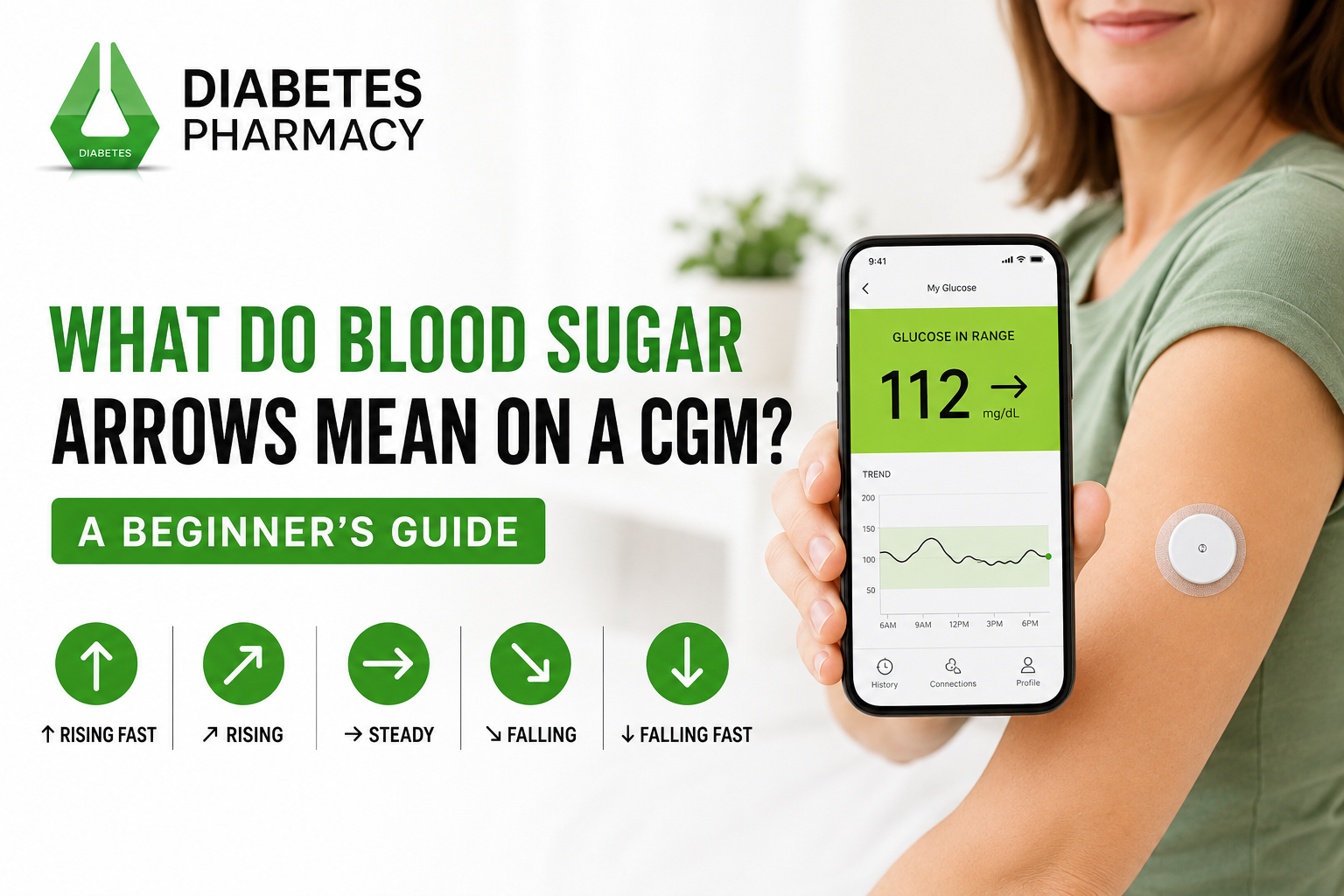
Continuous glucose monitors (CGMs) show more than your glucose number. They also display a trend arrow showing whether glucose is rising, falling, or staying relatively steady. These arrows provide useful context.
What Is a CGM Trend Arrow?
A CGM trend arrow is a visual indicator showing how your glucose level is changing. Exact symbols and meanings vary between CGM systems, so always check the instructions for your device.
Generally, a horizontal arrow means glucose is relatively stable. An upward arrow indicates rising glucose, while a downward arrow indicates falling glucose. Angled arrows may indicate moderate changes, while stronger arrows can indicate faster movement.
The number tells you where your glucose is now. The arrow gives an indication of where it may be heading.
Why Do Blood Sugar Arrows Matter?
A single glucose reading is only a snapshot. A trend arrow provides context by showing direction and may help you recognise developing highs or lows earlier.
For example, 150 mg/dL with a rising arrow may continue increasing, while the same reading with a falling arrow means glucose is moving downward.
Trend information can help you notice patterns linked with meals, exercise, medication, stress, or illness. Arrows should support your diabetes management plan, not replace professional advice.
Common CGM Arrow Meanings
Steady or horizontal arrow: Glucose is relatively stable or changing slowly.
Up arrow: Glucose is rising. A faster upward arrow generally means a quicker increase.
Down arrow: Glucose is falling. A faster downward arrow generally means a quicker decrease.
Angled upward arrow: Glucose is rising at a moderate rate.
Angled downward arrow: Glucose is falling at a moderate rate.
The exact rate represented by each arrow differs between devices. Never assume an arrow on one CGM means exactly the same rate on another.
How Should Beginners Read the Number and Arrow Together?
Start with the glucose number, then consider the arrow and your recent circumstances. Do not look at the arrow alone.
A reading within your target range with a steady arrow may indicate stability. A similar reading with a rising arrow tells a different story. A reading with a fast downward arrow may need closer attention, particularly if you use insulin or have experienced low glucose before.
Do not change insulin or other medication simply because an arrow appears. Follow the treatment plan provided by your diabetes healthcare team.
What Causes Glucose to Rise Quickly?
Meals containing carbohydrates can raise glucose, especially after larger portions. Stress, illness, reduced physical activity, missed medication, and some medicines can also affect glucose.
Your CGM can help identify repeated patterns. If you regularly see upward arrows after a particular meal, record what you ate and discuss the pattern with your healthcare professional. Avoid making treatment changes based on one reading.
What Causes Glucose to Fall Quickly?
Glucose can fall because of physical activity, insulin, diabetes medicines, delayed meals, alcohol, or other individual factors. A downward trend can therefore have different meanings.
If your CGM shows a rapid downward trend with low-glucose symptoms, follow your hypo treatment plan. If symptoms do not match the reading, confirm the result with a blood glucose meter when appropriate.
Using CGM Arrows Around Meals
After eating, glucose may rise before returning toward your usual range. Looking at the number, arrow, and timing together can help you understand your response to different foods.
You may notice different responses after different meals. Recording meals and CGM trends can reveal patterns over time.
Using CGM Arrows During Exercise
Exercise can affect glucose in different ways. Some activities may cause glucose to fall, while intense exercise can sometimes produce a temporary rise. The effect depends on insulin, food intake, duration, and intensity. A trend arrow provides context, but it should not be used alone to decide whether to exercise or change treatment. Follow your diabetes exercise plan and ask your healthcare team for guidance.
CGM Products Available at Diabetes Pharmacy
If you are considering a CGM, Diabetes Pharmacy offers diabetes monitoring products through its online store. Its current range includes Libre 2 Plus and Libre 3 Plus, along with diabetes-care supplies. The FreeStyle Libre 3 Plus product page states that it provides real-time glucose readings every minute, optional alerts, and up to 15 days of sensor wear.
The website also lists the FreeStyle Libre 2 sensor for monitoring interstitial glucose and trend information. Availability and specifications can change, so check product details and manufacturer instructions before purchasing.
Explore the range on the Diabetes Pharmacy homepage or review CGM product information. If unsure, speak to your diabetes healthcare professional.
Tips for Using CGM Arrows Safely
Learn the specific arrow meanings for your CGM model. Look at the glucose number and trend together. Consider recent meals, exercise, medication, and symptoms. Most importantly, follow your prescribed diabetes management plan.
CGMs measure glucose in interstitial fluid, so readings can sometimes differ from a blood glucose meter when glucose changes quickly. If a reading does not match how you feel, follow manufacturer and healthcare guidance about confirming it.
When Should You Seek Help?
Contact your healthcare professional about unexplained highs or lows, repeated rapid changes, or difficulty interpreting CGM data. Seek urgent help for severe hypoglycaemia symptoms, significant illness, or other concerning symptoms.
Conclusion
Blood sugar arrows make CGM data more useful by showing the direction and speed of glucose change, not just the current number. Beginners should read the glucose value, trend arrow, recent activity, and symptoms together. These arrows can help you recognise patterns and discuss them with your healthcare team.
Diabetes Pharmacy provides products such as Libre 2 Plus and Libre 3 Plus online. Choose a device based on your needs, compatibility, and professional guidance, and follow manufacturer instructions.
FAQs
- What does an upward arrow mean on a CGM?
An upward arrow generally means glucose is rising. The speed depends on the CGM model and arrow type. - What does a downward arrow mean on a CGM?
A downward arrow means glucose is falling. A stronger downward arrow generally indicates a faster decrease. - Can I change insulin because of a trend arrow?
Do not change insulin or medication solely because of an arrow. Follow your prescribed treatment plan and ask your healthcare team for guidance. - Do all CGMs use the same arrows?
No. Arrow symbols and glucose-change rates can differ between CGM systems. Always check your device instructions. - Where can I find CGM products in the UK?
Diabetes Pharmacy offers CGM products and diabetes monitoring supplies online, including Libre 2 Plus and Libre 3 Plus. Check product details before ordering.