FreeStyle Libre 2 plus can help people with diabetes understand how glucose levels change. Instead of relying only on occasional finger-prick tests, the sensor provides glucose information that can reveal patterns connected with meals, exercise, sleep, stress, and medication. Getting useful information from the system requires more than checking a single number. To gain accurate insights, understand how the sensor works, follow trends over time, and use the data alongside medical guidance.
Understand What FreeStyle Libre 2 Measures
FreeStyle Libre 2 Plus measures glucose in interstitial fluid, the fluid surrounding cells under the skin. A traditional blood glucose meter measures glucose directly from blood. Because glucose moves from the bloodstream into interstitial fluid, a short delay can occur between the two readings.
This difference may be more noticeable when glucose is changing quickly, such as after eating, exercising, or treating a low glucose level. Understanding this delay can prevent concern when a sensor reading does not exactly match a finger-prick result.
Pay Attention to Trend Arrows
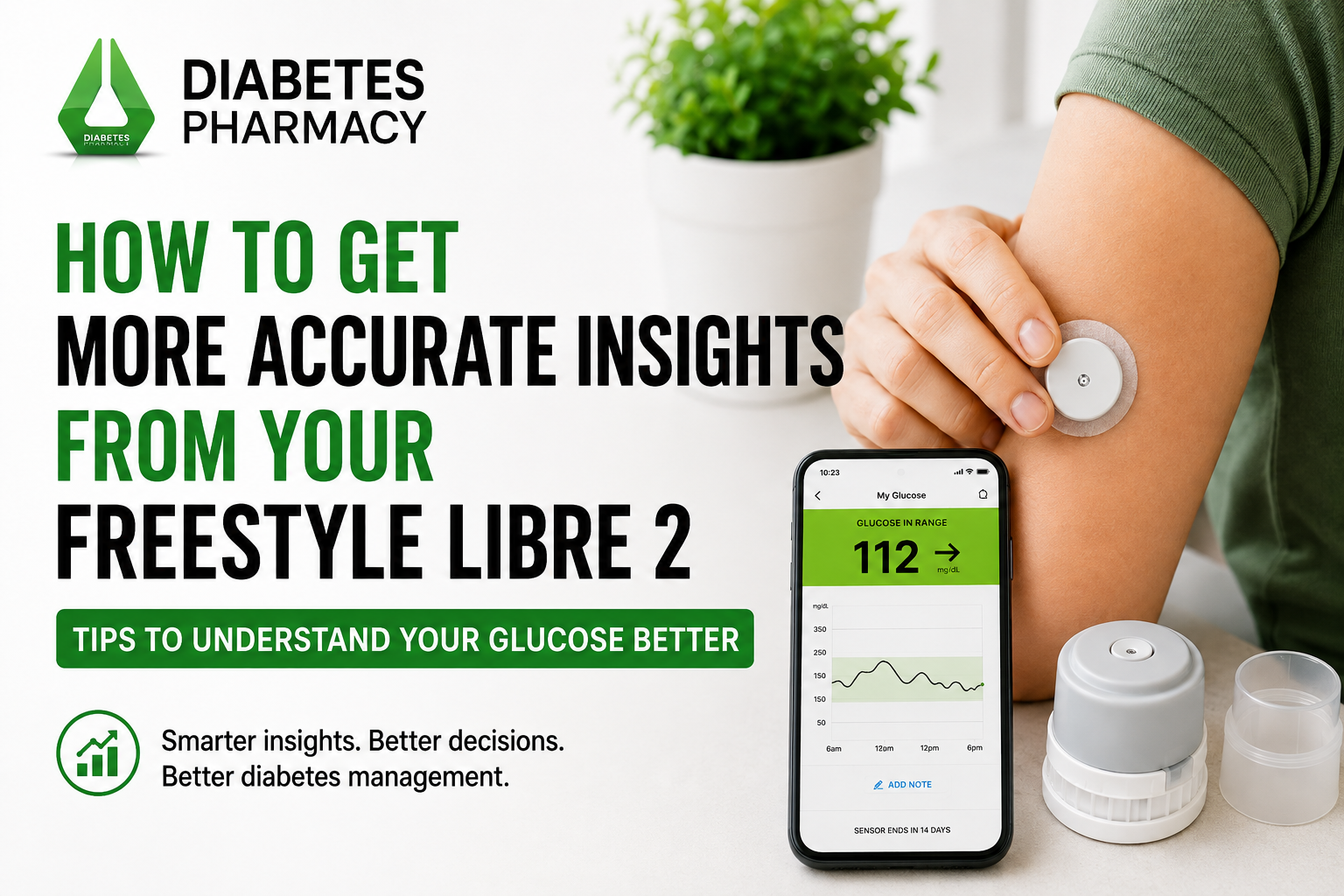
Trend arrows show whether glucose is rising, falling, or remaining relatively stable. A number alone gives only part of the picture. A reading within your target range may look reassuring, but a downward arrow could show that glucose is falling. An upward arrow may indicate that glucose is increasing after a meal. Reviewing the number together with the trend arrow gives you better context
Focus on Patterns, Not Single Readings
Continuous glucose monitoring provides a large amount of data. It can be tempting to react to every number, but repeated patterns are usually more useful than isolated readings.
Compare glucose levels at similar times each day. Look for patterns after meals, exercise, and overnight. You may notice that certain meals cause repeated rises, activity lowers glucose at particular times, or morning levels are consistently higher. The
Record Meals and Portion Sizes
Food has a major impact on glucose, so keeping simple meal notes can make your sensor data more useful. Record what you eat, approximate portion sizes, and meal times.
Then review how glucose changes during the following hours. Foods containing similar amounts of carbohydrate may affect you differently because fibre, fat, protein, preparation, and portion size can influence the response. Comparing similar meals over several days can help identify which choices are associated with more stable glucose patterns.
Consider Exercise and Daily Activity
Physical activity can affect glucose differently depending on the type and intensity of exercise. Walking, cycling, strength training, and high-intensity workouts may produce different responses.
Recording the timing and type of activity can help you compare exercise with your glucose graph. Over time, this can show when exercise is associated with more stable levels or when additional monitoring may be needed.
Use Time in Range
Time in Range shows the percentage of time your glucose remains within your recommended target range. It can provide a broader picture of glucose management than focusing on a single reading or average.
It can also help identify how much time you spend above or below your target. Your healthcare professional can help determine appropriate targets for your individual needs.
Consider Sleep, Stress, and Illness
Glucose levels are influenced by more than meals and exercise. Poor sleep, stress, illness, infection, routine changes, and some medications can affect glucose.
If your readings look different from usual, consider what else has changed. A stressful week or poor sleep may help explain unexpected patterns even when your diet has stayed similar.
Know When to Confirm With a Blood Glucose Meter
FreeStyle Libre 2 can reduce routine finger-prick testing, but blood glucose checks may still be needed in some situations.
If symptoms do not match the sensor reading, if glucose is changing rapidly, or if the system advises a blood glucose check, follow the device instructions and your diabetes care plan. Never ignore symptoms of significant high or low glucose because the sensor shows a different value.
Use a Trusted Diabetes Pharmacy
Reliable supplies are an important part of glucose monitoring. Purchasing sensors and related products from a trusted diabetes pharmacy can help ensure you receive appropriate products and clear information about storage and handling.
A specialist diabetes pharmacy may also provide access to glucose monitoring supplies that support your prescribed management routine. Always follow professional advice when selecting or changing monitoring equipment.
Conclusion
Getting more accurate insights from FreeStyle Libre 2 means understanding patterns rather than simply collecting numbers. Learn how sensor glucose differs from blood glucose, use trend arrows, track meals and exercise, review Time in Range, and compare reports over several days or weeks.
Also consider sleep, stress, illness, and routine changes when interpreting results. Discuss repeated patterns with your healthcare team before making significant changes to medication, insulin, diet, or treatment.
Used thoughtfully, FreeStyle Libre 2 can provide valuable information that supports better-informed diabetes management and helps you understand how everyday choices affect glucose.
instructions.
Frequently Asked Questions
1. Why does FreeStyle Libre 2 differ from a blood glucose meter?
FreeStyle Libre 2 measures glucose in interstitial fluid, while a blood glucose meter measures glucose directly from blood. A short delay can occur, particularly when glucose is changing quickly.
2. How can I get more reliable FreeStyle Libre 2 readings?
Follow the manufacturer’s application instructions, use the recommended sensor location, keep the skin clean and dry, and focus on trends. Confirm with a blood glucose test when advised.
3. Should I check my glucose after every meal?
Not necessarily. Reviewing glucose before and after selected meals can help you understand how different foods, portions, and meal combinations affect your individual glucose response.
4. What should I do if the sensor reading does not match how I feel?
Follow the device instructions and your diabetes plan. If symptoms do not match the sensor reading, a finger-prick blood glucose test may be required. Seek medical help for severe symptoms.
5. Can FreeStyle Libre 2 reports help my healthcare professional?
Yes. Reports can help identify repeated highs, lows, glucose variability, and other patterns. Treatment decisions should be made with your healthcare team rather than from individual sensor readings alone.