
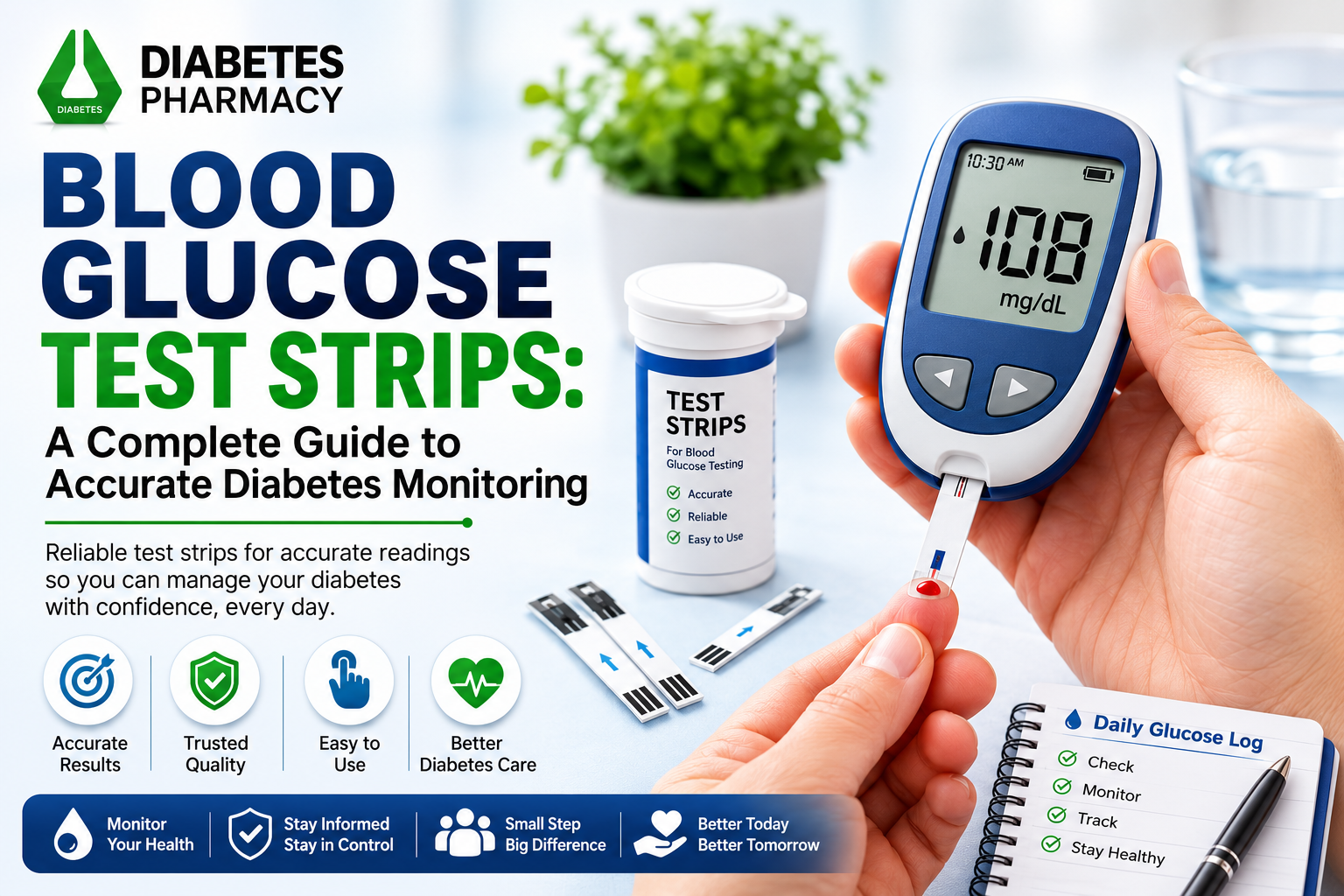
Managing diabetes effectively begins with regular blood glucose monitoring. Among the most essential tools for people living with diabetes are blood glucose test strips. These small but powerful strips work alongside a blood glucose meter to provide fast and accurate blood sugar readings, helping individuals make informed decisions about their daily diabetes management.
Whether you’re newly diagnosed or have been managing diabetes for years, understanding how test strips work and how to use them correctly is essential for maintaining healthy blood glucose levels.
In this guide, we’ll cover everything you need to know about blood glucose test strips, including their purpose, benefits, proper usage, storage, and tips for choosing the right strips.
What Are Blood Glucose Test Strips?
Blood glucose test strips are thin, disposable strips designed to measure the amount of glucose in a small blood sample. They are used together with a compatible blood glucose meter to provide a quick blood sugar reading.
Each strip contains special chemicals that react with glucose in the blood. Once the strip is inserted into the glucose meter and a small blood sample is applied, the meter analyzes the reaction and displays the blood glucose level within seconds.
Test strips play a vital role in daily diabetes care by helping users monitor blood sugar levels accurately and consistently.
Why Are Blood Glucose Test Strips Important?
Regular blood glucose testing allows individuals to understand how their body responds to food, physical activity, medication, stress, and illness.
Using test strips regularly can help:
- Monitor daily blood glucose levels
- Track changes over time
- Support treatment decisions
- Help identify high or low blood sugar
- Encourage healthier lifestyle choices
- Assist healthcare providers in evaluating diabetes management
Routine testing is an important part of an overall diabetes care plan.
How Do Blood Glucose Test Strips Work?
Blood glucose test strips use an enzyme that reacts with glucose in the blood sample.
The process is simple:
- Insert the test strip into a compatible glucose meter.
- Use a lancing device to obtain a small drop of blood.
- Touch the edge of the strip to the blood sample.
- The strip absorbs the blood automatically.
- The glucose meter analyzes the sample.
- Your blood glucose reading appears on the display within a few seconds.
Modern test strips require only a tiny blood sample and provide fast, reliable results.
Benefits of Using Blood Glucose Test Strips
Accurate Blood Sugar Monitoring
High-quality test strips provide reliable readings that help users make informed decisions regarding meals, exercise, and medication.
Quick Results
Most glucose meters display results in just 5–10 seconds, making testing convenient anytime during the day.
Easy to Use
Modern test strips are designed for simple, hassle-free testing with minimal blood samples.
Portable and Convenient
Test strips are lightweight and easy to carry, making it simple to monitor blood sugar at home, work, school, or while traveling.
Supports Better Diabetes Management
Consistent monitoring helps users recognize blood sugar patterns and work with healthcare professionals to improve diabetes management.
Types of Blood Glucose Test Strips
Although all test strips serve the same basic purpose, different brands and meters use different strip technologies.
Common types include:
Standard Blood Glucose Test Strips
Designed for traditional finger-prick blood glucose testing.
No Coding Test Strips
These strips eliminate manual coding, reducing the risk of user error and making testing more convenient.
High-Accuracy Test Strips
Designed with advanced technology to improve testing accuracy and consistency.
Alternate Site Testing Strips
Some systems allow blood samples from areas other than the fingertip, depending on the manufacturer’s recommendations.
How to Use Blood Glucose Test Strips Correctly
For accurate results, follow these steps:
Step 1: Wash Your Hands
Clean your hands with soap and warm water before testing.
Step 2: Prepare the Meter
Insert a compatible test strip into your blood glucose meter.
Step 3: Use a Lancing Device
Obtain a small blood sample from your fingertip.
Step 4: Apply Blood
Touch the edge of the strip to the blood drop.
Step 5: Read the Result
Wait for the glucose meter to display your blood sugar level.
Step 6: Record the Reading
Keep a log of your results or use your meter’s memory or connected mobile app if available.
Tips for Accurate Blood Glucose Testing
To improve testing accuracy:
- Wash and dry your hands before testing.
- Use only compatible test strips.
- Check the expiration date before use.
- Store strips properly.
- Use sufficient blood as instructed.
- Avoid touching the testing area of the strip.
- Close the test strip container immediately after removing a strip.
Following the manufacturer’s instructions helps ensure reliable readings.
How to Store Blood Glucose Test Strips
Proper storage is essential for maintaining accuracy.
Store your test strips:
- In their original container
- In a cool, dry place
- Away from direct sunlight
- Away from excessive heat or humidity
- With the container tightly closed
- Away from bathrooms or kitchens where moisture levels may be high
Never use expired or damaged test strips, as they may provide inaccurate results.
Choosing the Right Blood Glucose Test Strips
When selecting test strips, consider:
Meter Compatibility
Always purchase strips specifically designed for your glucose meter model.
Accuracy
Choose products from reputable manufacturers known for quality and reliability.
Ease of Use
Look for strips that require a small blood sample and provide fast results.
Availability
Choose strips that are readily available for convenient replacement.
Cost
Compare prices while ensuring quality and compatibility with your meter.
Choose the Right Blood Glucose Monitoring Solution
Selecting the right diabetes monitoring product depends on your healthcare needs, lifestyle, and compatibility with your glucose monitoring system. Many users prefer advanced continuous glucose monitoring solutions such as FreeStyle Libre 2, FreeStyle Libre 3, and Dexcom products for their reliable performance and ease of use. These trusted diabetes care solutions can help support regular glucose monitoring when used according to the manufacturer’s instructions and your healthcare provider’s guidance. Before purchasing any monitoring device or test strips, always ensure they are compatible with your existing system and meet your individual diabetes management needs.
Conclusion
Blood glucose test strips remain an essential tool for accurate diabetes monitoring, helping users check glucose levels and better understand daily blood sugar patterns. Using compatible, properly stored test strips and following the correct testing technique can support more reliable readings. A trusted diabetes pharmacy can help provide blood glucose test strips, meters, and other diabetes monitoring supplies for consistent everyday management.
FAQs
- What are blood glucose test strips used for?
Blood glucose test strips are used with a blood glucose meter to measure blood sugar levels from a small blood sample. - Can I use any test strip with my glucose meter?
No. Test strips are designed for specific glucose meter models. Always use the strips recommended by the meter manufacturer. - How long do blood glucose test strips last?
Test strips have an expiration date printed on the packaging. Always check the date before use and discard expired strips. - Why is proper storage important?
Heat, humidity, and direct sunlight can affect the accuracy of test strips. Proper storage helps maintain their performance. - How often should I test my blood sugar?
The frequency depends on your diabetes treatment plan and your healthcare provider’s recommendations. Some people may test multiple times a day, while others may need less frequent testing.