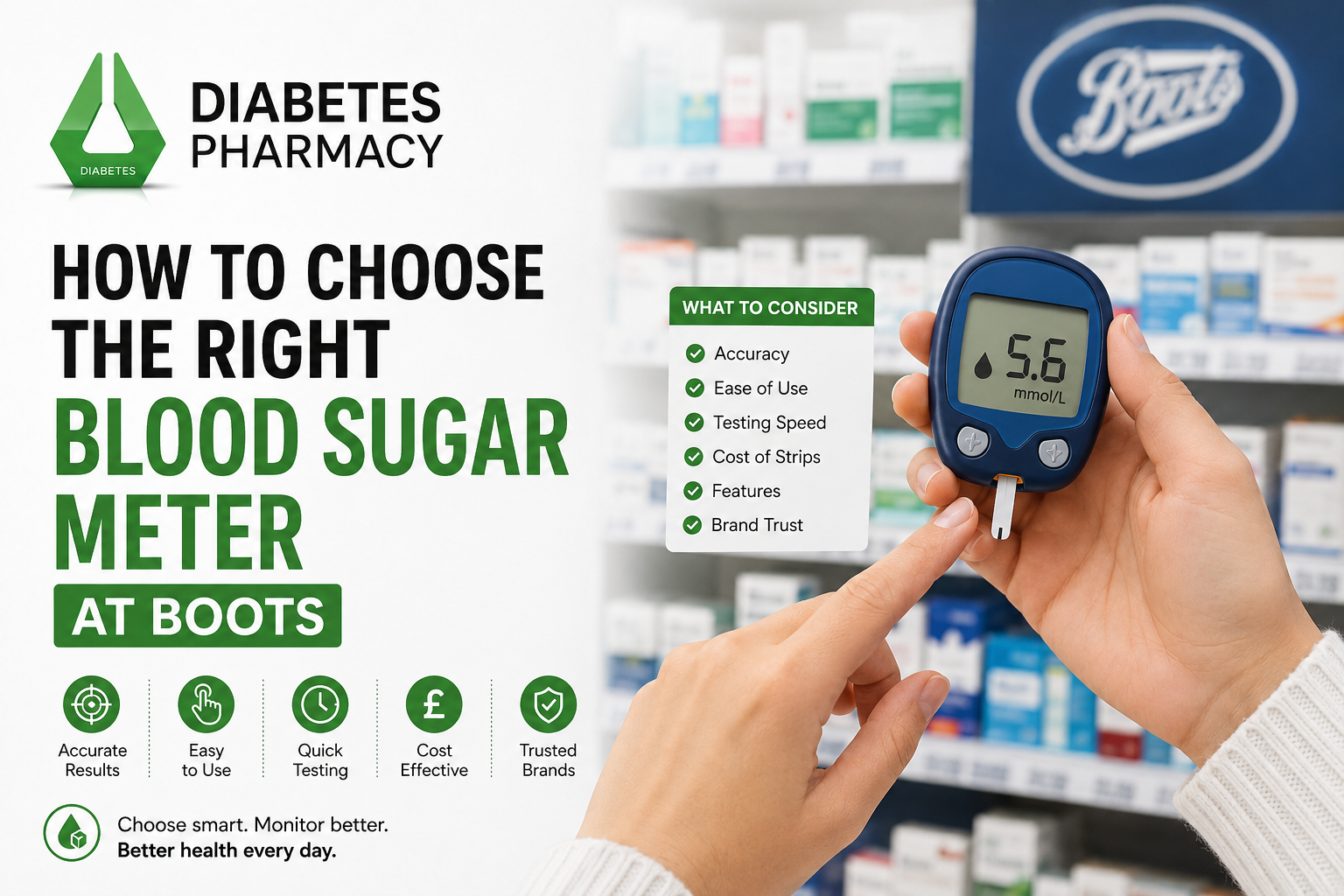
Choosing the right blood sugar meter can make regular glucose testing easier, more comfortable, and affordable. When comparing a blood sugar meter at Boots, it’s important to consider accuracy, ease of use, test-strip costs, features, and long-term availability. This guide covers the key factors to help you compare popular options and choose a meter that fits your daily diabetes care needs.
Why the Right Meter Matters
A blood glucose meter is not something you purchase just once. You will also need test strips and lancets regularly, and some meters may connect with a mobile app for easier record keeping. Choosing the right meter can make a difference to your daily testing experience.
A reliable meter can provide accurate glucose readings that help you understand how food, exercise, and treatment may affect your blood sugar levels. Comfort is also important, especially if you need to test several times a day. The meter should be easy to hold, operate, and read.
Ongoing costs are another important consideration. While the meter itself may be affordable, replacement strips and lancets can become a regular expense. It is also useful to choose a meter that makes it easy to store and review your readings so you can identify patterns over time.
Regular blood glucose monitoring can support better day to day diabetes management. Taking time to choose a meter that suits your testing routine, comfort needs, and budget can make regular monitoring much easier.
Key Factors to Consider
Before comparing specific products, it helps to know which features actually matter for day-to-day use.
Factor | Why it matters |
Cost per test | The strip or cassette price, not the meter price, is what you’ll pay for years. A cheap meter with expensive strips can cost more overall. |
Blood sample size | A smaller sample (measured in microlitres) generally means a less painful, easier test — useful if you test often. |
Testing speed | Most modern meters give a result in 4–10 seconds, but this can matter if you’re testing in public or in a hurry. |
Memory & averaging | Meters that store readings and calculate 7, 14 or 30-day averages make it easier to spot trends between GP visits. |
App or Bluetooth connectivity | Useful if you or your diabetes team want to review results digitally, but relies on having your phone to hand. |
Meal markers | The ability to tag a reading as “before” or “after” a meal, on the meter itself, makes the data far easier to interpret later. |
Ease of handling | Larger buttons, backlit screens and simple strip loading matter if dexterity or eyesight are a concern. |
NHS prescription eligibility | Some meters and their strips are listed in the Drug Tariff, meaning your GP can prescribe them rather than you buying them each time. |
Blood Sugar Meters Available at Boots
At the time of writing, Boots stocks a small range of meters, from a value own-brand kit through to Accu-Chek’s more advanced systems. Prices and stock can change, so always check current pricing on boots.com or in store.
Meter | Typical price | What’s in the box | Approx. cost per test |
Boots Blood Glucose Monitoring System | £19.99 | Meter, 10 test strips, 10 lancets, lancing device, control solution, case | ~£0.34 (50-pack strips £16.99) |
£34.99 | Meter, 10 test strips, FastClix finger pricker, 2 lancet drums (12 lancets) | ~£0.42 (50-pack strips £20.99) | |
Varies by bundle | Meter using a 50-test cassette rather than loose strips | ~£0.48 (50-test cassette £23.99) | |
Accu-Chek® Guide / Guide Me | Premium tier | Meter, lancing device, strips — no-coding system with mySugr app support | Similar to Instant strip pricing |
Prices are indicative and correct at the time of research; always confirm current pricing on boots.com before buying.
If your Boots meter takes a different strip, it’s worth double-checking compatibility before you buy in bulk, our guide on how to choose the right blood glucose test strips for your meter walks through the common mistakes people make. Popular strip and lancet ranges you may come across include Accu-Chek Aviva test strips, Accu-Chek Active test strips, Bayer Contour Plus test strips, OneTouch Verio test strips, the Accu-Chek FastClix lancing device, and GlucoRx sterile lancets. If a Boots-bought meter isn’t the right fit, the GlucoRx Nexus Blood Glucose Monitoring System Kit is another all-in-one kit worth comparing, with a large backlit display and a lower entry price.
If you decide fingerstick testing isn’t giving you the picture you need, it’s also worth knowing that continuous glucose monitors such as the FreeStyle Libre 2 Plus and FreeStyle Libre 3 Plus are available as a needle-free alternative that tracks glucose automatically throughout the day and night.
Working Out the True Cost of a Meter
The price on the box is really the price of the meter plus a small sample of strips usually only 10. At one test a day, ten strips last a week and a half; for anyone testing before and after meals, they can be gone in two or three days. To compare meters fairly, it helps to work out the cost of a few months of testing, not just the starter kit.
As a rough example, based on around 200 tests (roughly seven to eight months of regular testing):
Item | Boots own-brand | Accu-Chek Instant |
Starter kit (10 strips) | £19.99 | £34.99 |
Additional strips (≈190 more, in 50-packs) | ≈£64.60 | ≈£79.76 |
Lancets (separate cost) | From a few pounds for a pack of 100 | FastClix refills from ~£15 for 102 |
Approximate running total | ≈£85–£90 | ≈£130–£150 |
This isn’t a reason to automatically pick the cheapest option accuracy, comfort and features matter too, but it’s worth doing this sum before deciding, especially if you’ll be testing multiple times a day. If you’d rather order strips, lancets and control solution together and have them delivered, you can compare current prices in the Diabetes Pharmacy shop.
Practical Tips for Choosing at Boots
- Ask the Boots pharmacist for guidance on choosing a suitable meter and check whether NHS prescription options are available. Choose a device that is easy to read and use, especially if you have eyesight or dexterity concerns. Consider app connectivity if you want digital tracking, and always compare the ongoing cost and availability of test strips and lancets. For more diabetes care advice, read our guide on key challenges in diabetes care and how to manage them better.
Conclusion
Choosing the right blood sugar meter involves more than comparing prices. Consider accuracy, ease of use, test-strip availability, features, and ongoing costs before making your choice. A suitable meter can make regular glucose testing simpler and more convenient. If you need help choosing the right diabetes monitoring products, a trusted Diabetes Pharmacy can help you explore suitable options and make an informed decision.
FAQs
How do I choose the right blood sugar meter?
Consider accuracy, ease of use, display, testing speed, memory, test-strip availability, and ongoing costs.
- Are blood sugar meters available at Boots?
Yes, Boots offers different blood glucose monitoring products, including blood glucose meters, test strips, and lancets - What should I look for in a blood sugar meter?
Look for a meter that is simple to operate, provides reliable readings, requires a small blood sample, and has affordable, readily available test strips. - How often should I use a blood sugar meter?
Testing frequency varies depending on your diabetes type, treatment, and healthcare professional’s advice. - Are blood sugar meters better than CGMs?
They work differently. A blood sugar meter provides a reading from a finger-prick blood sample, while a CGM continuously measures glucose using a sensor. The right option depends on individual needs and clinical advice.