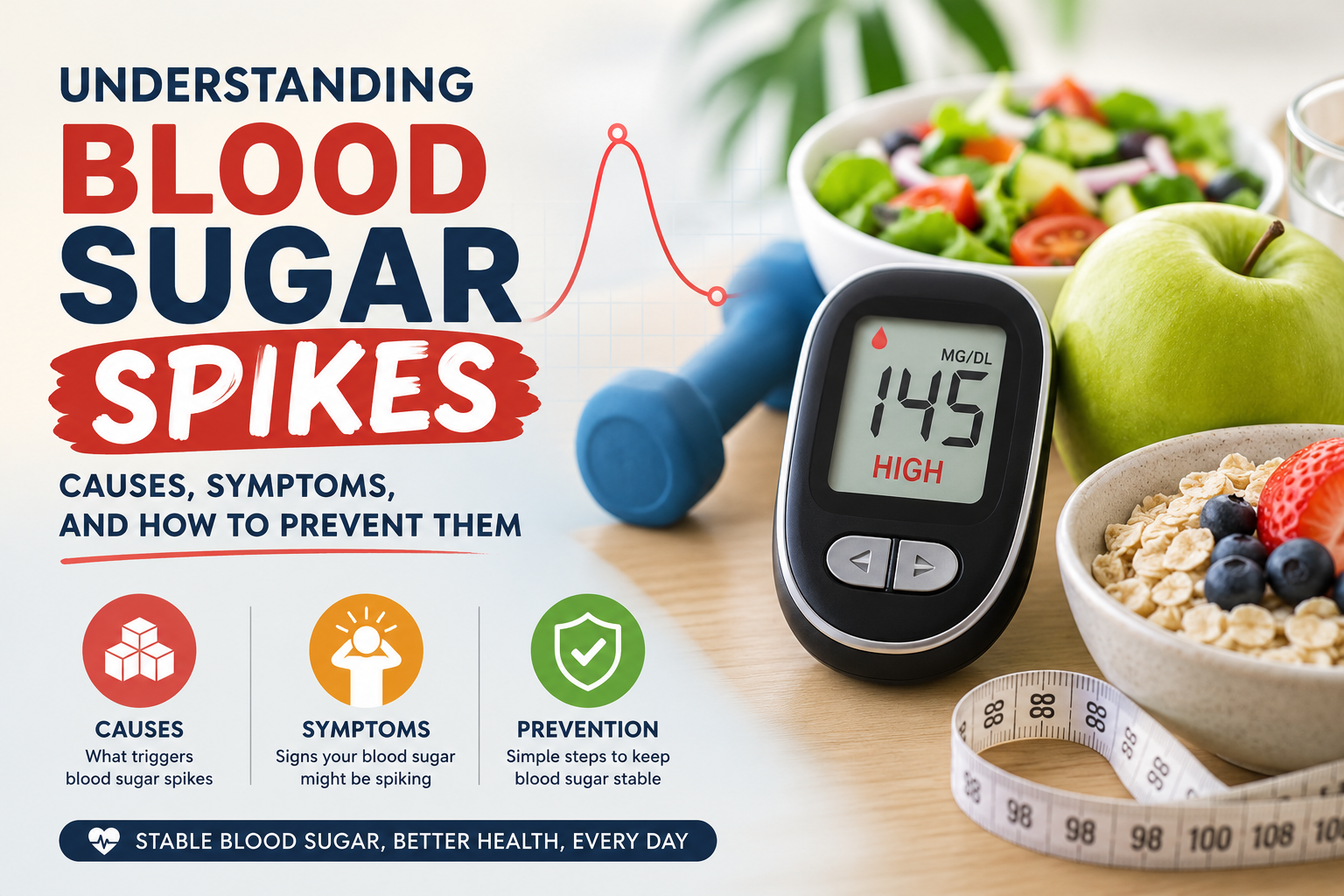
Managing blood sugar levels is one of the most important aspects of diabetes care. While occasional fluctuations are normal, frequent blood sugar spikes can make diabetes management more challenging and may increase the risk of long-term health complications.
Many people living with diabetes experience unexpected rises in glucose levels, even when they believe they are following a healthy routine. Understanding what causes blood sugar spikes and learning how to manage them can help improve glucose control and overall well-being.
What Is a Blood Sugar Spike?
A blood sugar spike, also known as hyperglycemia, occurs when glucose levels rise above the target range. This typically happens after eating, but it can also be triggered by stress, illness, medication changes, or reduced physical activity.
For people with diabetes, repeated spikes can make it more difficult to maintain healthy glucose levels and may affect long-term health outcomes.
Common Causes of Blood Sugar Spikes
Several factors can contribute to sudden increases in blood sugar levels.
High-Carbohydrate Meals
Carbohydrates have the greatest impact on blood glucose levels. Foods such as white bread, sugary drinks, pastries, and processed snacks can cause rapid increases in blood sugar.
Even healthy carbohydrate sources may contribute to spikes if portion sizes are too large.
Lack of Physical Activity
Exercise helps the body use glucose more efficiently. Long periods of inactivity can make it harder for cells to absorb glucose, leading to higher blood sugar levels.
Stress and Anxiety
Physical and emotional stress can trigger the release of hormones such as cortisol and adrenaline. These hormones may increase blood glucose levels, even without changes in diet.
Illness or Infection
When the body is fighting illness, it often releases additional hormones that can raise blood sugar levels. This is why glucose monitoring becomes especially important during periods of sickness.
Medication Factors
Missing diabetes medication doses or taking medications incorrectly can contribute to elevated blood glucose levels.
Some non-diabetes medications may also affect glucose control.
Poor Sleep
Research has shown that inadequate sleep may affect insulin sensitivity and contribute to blood sugar fluctuations.
Signs and Symptoms of Blood Sugar Spikes
Symptoms can vary depending on how high blood glucose levels become.
Common signs include:
- Increased thirst
- Frequent urination
- Fatigue
- Blurred vision
- Headaches
- Difficulty concentrating
- Dry mouth
- Increased hunger
Some individuals may not notice symptoms immediately, which is why regular monitoring is important.
Why Blood Sugar Spikes Matter
Occasional spikes happen to everyone. However, frequent or prolonged periods of high blood sugar can increase the risk of diabetes-related complications.
Potential concerns include:
- Nerve damage
- Eye complications
- Kidney disease
- Cardiovascular issues
- Reduced energy levels
- Poor wound healing
Maintaining stable glucose levels can help reduce these risks and improve quality of life.
How to Prevent Blood Sugar Spikes
Choose Balanced Meals
Combining carbohydrates with protein, healthy fats, and fibre can help slow glucose absorption and reduce sudden increases in blood sugar.
Monitor Portion Sizes
Even healthy foods can affect glucose levels when consumed in large quantities. Paying attention to serving sizes can support better glucose management.
Stay Active
Regular physical activity helps improve insulin sensitivity and supports healthy blood sugar control.
Walking after meals can be particularly beneficial for reducing post-meal glucose rises.
Stay Hydrated
Drinking enough water supports overall health and helps the body regulate glucose levels more effectively.
Manage Stress
Relaxation techniques such as meditation, deep breathing, and regular exercise can help reduce stress-related blood sugar fluctuations.
Follow Your Treatment Plan
Taking medications as prescribed and attending regular healthcare appointments are essential for effective diabetes management.
The Role of Continuous Glucose Monitoring
Traditional finger-prick testing provides glucose readings at specific moments in time. While useful, it may not always capture rapid glucose changes throughout the day.
Continuous glucose monitoring (CGM) systems provide real-time glucose data and trend information, helping individuals better understand how food, exercise, stress, and daily habits affect their blood sugar levels.
CGM technology can help identify patterns, reduce unexpected fluctuations, and support more informed diabetes management decisions.
When to Speak with a Healthcare Professional
If blood sugar spikes occur frequently despite following a diabetes management plan, it may be helpful to consult a healthcare professional. They can review medications, lifestyle factors, monitoring data, and treatment strategies to identify potential adjustments.
Final Verdict
Blood sugar spikes are a common part of diabetes management, but understanding their causes can help reduce their impact. By making informed choices about nutrition, physical activity, stress management, and glucose monitoring, individuals can achieve better blood sugar control and improve overall health.
Modern monitoring tools, including continuous glucose monitoring systems, provide valuable insights that can help people with diabetes make more confident decisions and maintain healthier glucose levels throughout the day.
FAQS
- What causes blood sugar spikes in people with diabetes?
Blood sugar spikes can be caused by high-carbohydrate meals, stress, illness, lack of physical activity, poor sleep, or missed medication doses. - What blood sugar level is considered a spike?
The exact level varies by individual, but glucose readings above your target range may be considered a blood sugar spike. - Can stress increase blood sugar levels?
Yes. Stress hormones can cause the liver to release more glucose into the bloodstream, leading to higher blood sugar levels. - How can I prevent blood sugar spikes after meals?
Choose balanced meals, monitor portion sizes, stay active, and track glucose levels regularly to identify patterns. - Can a CGM help identify blood sugar spikes?
Yes. Continuous glucose monitoring systems provide real-time glucose data and trend information, helping users identify and manage blood sugar fluctuations more effectively.