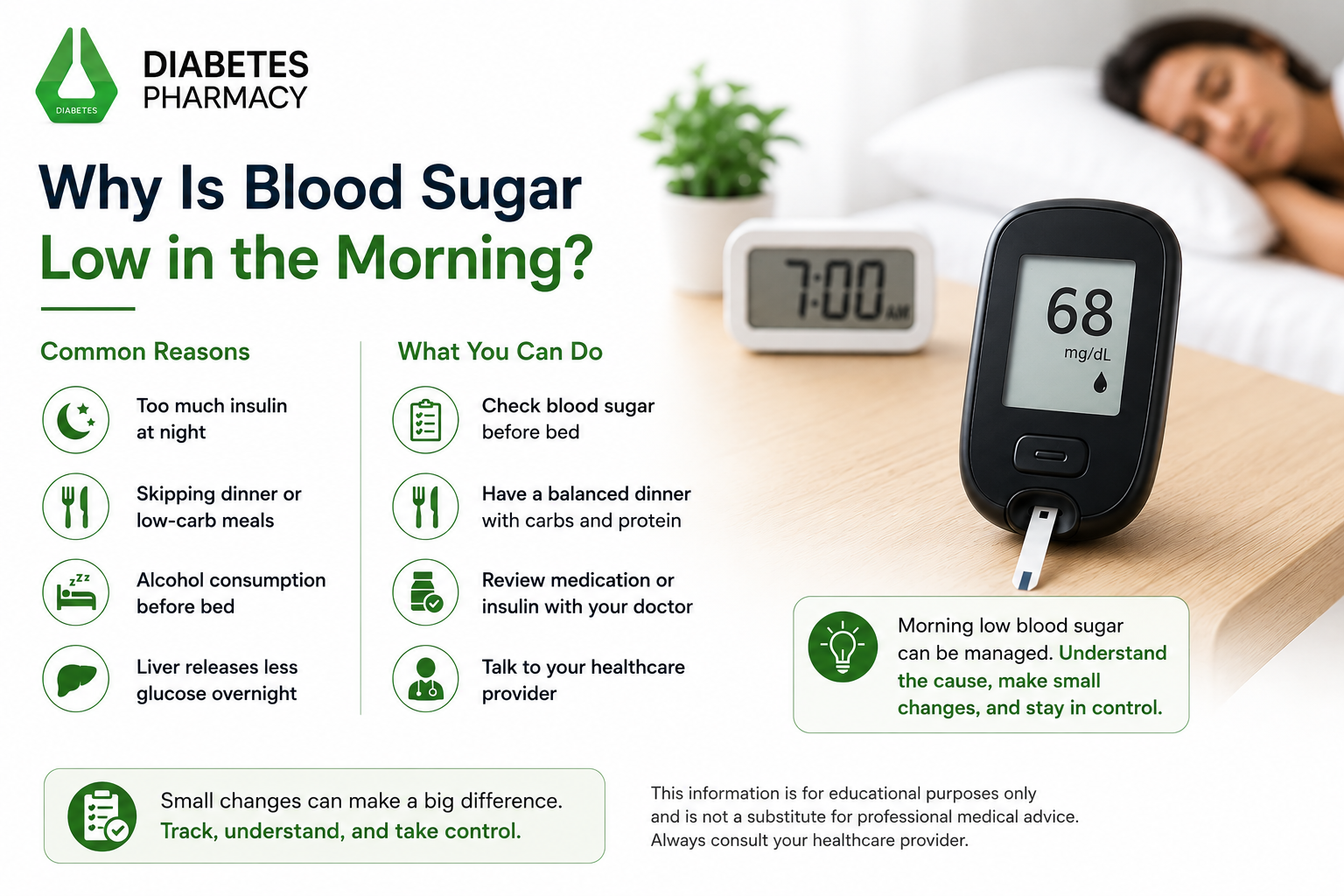
Morning blood sugar levels tend to fluctuate even in people without diabetes. Your blood sugar levels may be impacted by the timing and type of meals, your medication, physical activity, alcohol consumption, and overall sleep. If you want to control your diabetes, you must understand why blood sugar decreases while you sleep.
What Is Low Blood Sugar?
Low blood sugar, also known as hypoglycaemia, occurs when glucose levels fall below the range recommended for you. For many people with diabetes, a blood glucose level below 4 mmol/L is considered low, although individual circumstances and treatment plans can vary.
Low blood sugar may cause symptoms such as sweating, shaking, hunger, dizziness, weakness, confusion, or a fast heartbeat. Severe hypoglycaemia can be dangerous and requires urgent attention.
Why do I have Low Blood Sugar in the Morning?
There are multiple explanations for waking up with low blood sugar. If you wish to know the answer, you need to track your meals, record your blood sugar levels, log your activities, and tell your doctor about any changes in your medication.
Insulin
There are various insulins and medications that stimulate the production of insulin. Most of these drugs cause a drop in blood sugars. If you take your insulin, and food at a different time than your medication, or at a time that doesn’t satisfy your overnight blood sugar needs, your blood sugar will eventually bottom out.
Your medication should never be self adjusted.
Not Eating Enough
Eating a smaller dinner than usual, skipping dinner, or eating fewer carbohydrates than usual can lead to a decrease in blood sugar levels during the night regardless if you use blood sugar-lowering medication or not.
Morning hypoglycemia episodes are a reason to reach out to your healthcare provider.
Increased Physical Activity
Exercise influences your sugar levels for several hours post activity. Evening exercise may lead to a continued decrease in your glucose levels during the night.
The reason for evening physical activity pattern and morning hypoglycemia should be discussed with healthcare professional.
Alcohol Consumption
Alcohol inhibits the liver’s release of stored energy into the bloodstream. Combining late night alcohol consumption and lack of food increases the risk for low blood sugar during the night and in the following morning.
For diabetes and the impact of alcohol on your glucose levels and medication, speak with your healthcare professional.
Changes in Your Routine
Travel, changes in schedule and routine, illness, etc. can negatively impact blood glucose. Even a small change in your schedule can impact overnight glucose levels.
Make note of any changes in your schedule.
How Can You Tell If Your Blood Sugar Is Low Overnight?
Some individuals with hypoglycemia have symptoms that cause them to wake up in the middle of the night, while others do not experience any symptoms overnight.
Some signs are waking up with a headache, unusual fatigue, shaking, confusion, or feeling dizzy. However, these signs can mean other things, so checking with your glucose meter or monitoring system with the recommendation from your healthcare provider can give you important information.
If you are suspecting lows throughout the night on a regular basis, you should discuss it with your healthcare team. They may tell you to check your glucose at certain times or may encourage you to use a continuous glucose monitoring system to learn about the overnight pattern.
What Should You Do If Your Morning Blood Sugar Is Low?
If your glucose reading is below your recommended range, follow the hypoglycaemia treatment plan provided by your healthcare professional.
For many people with diabetes, a low blood glucose level is treated with a fast-acting source of carbohydrate, followed by another check after the recommended period. However, your treatment plan may be different depending on your circumstances.
If you become severely confused, unconscious, have a seizure, or cannot safely swallow, this is an emergency. Those around you should follow the emergency plan provided by your healthcare team and seek urgent medical assistance.
How Can You Track Morning Blood Sugar Patterns?
Keeping a simple record can help you and your healthcare team understand why morning glucose may be low. Consider recording your bedtime glucose reading, morning glucose reading, evening meals and snacks, physical activity, medication timing, alcohol consumption, and any symptoms experienced overnight.
If you regularly monitor your glucose levels, a reliable meter can help you keep track of your readings. The GlucoRx Q Blood Glucose Monitoring System is available from Diabetes Pharmacy and can be used for blood glucose testing.
Looking at several days of information can be more useful than focusing on one isolated reading.
When Should You Speak to a Healthcare Professional?
It is expected to have some variability in blood sugar levels and as such, you should not worry about morning blood sugar readings that are just under your target range. However, having low blood sugar levels in the morning many times is something you should not ignore, and you should speak to your healthcare provider. This becomes even more important when you notice symptoms in the night and you are not sure how to safely change your routine.
Your healthcare team will be able to evaluate your medication, meals, activity, glucose levels, and your current routine. Once they assess these factors, they will provide you advice most relevant to you.
Conclusion
Low blood sugar in the morning can have several possible causes, including diabetes medication, insufficient food intake, evening exercise, alcohol, and changes in your normal routine. Tracking your readings and daily activities can help reveal patterns.
If morning lows happen regularly, speak with your healthcare professional rather than changing medication on your own. A trusted Diabetes Pharmacy can also provide information about glucose meters, monitoring supplies, and other diabetes care products.
FAQs
1. What is considered low blood sugar?
For many people with diabetes, blood glucose below 4 mmol/L is considered low. Your healthcare professional can confirm the appropriate threshold and action plan for you.
2. Can skipping dinner cause low blood sugar in the morning?
It can, particularly for people using certain diabetes medicines or insulin. If you regularly experience morning lows, discuss your eating pattern and treatment with your healthcare professional.
3. Can exercise cause low blood sugar overnight?
Yes. Physical activity can continue to affect glucose levels for several hours, so evening exercise may contribute to overnight or morning lows in some people.
4. Why do I wake up sweating when my blood sugar is low?
Sweating can be a symptom of hypoglycaemia. If you regularly wake with sweating or other symptoms, check your glucose when appropriate and discuss the pattern with your healthcare team.
5. Should I change my diabetes medication if my morning blood sugar is low?
Do not change your medication dose yourself. Repeated low readings should be discussed with your healthcare professional, who can determine whether your treatment needs adjustment.