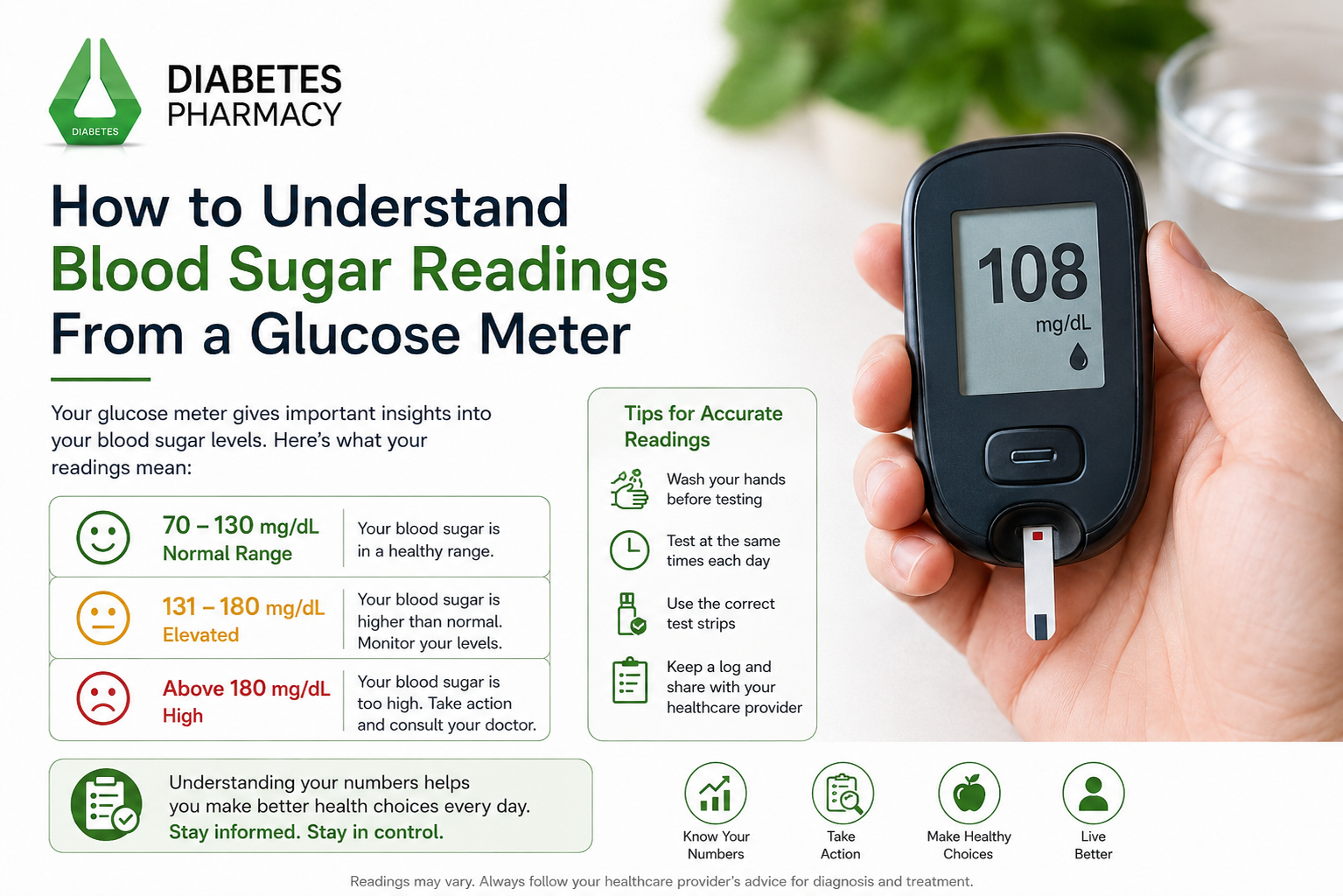
Understanding blood sugar readings from a glucose meter can make diabetes monitoring easier and help you recognise patterns in your glucose levels. A glucose meter measures the amount of glucose in a small blood sample, usually taken from your fingertip, and displays the result in mmol/L in the UK. However, a number on the screen is most useful when you understand when it was taken and what may have affected it.
What Is a Glucose Meter?
A glucose meter, also called a blood glucose meter or blood sugar meter, is a portable device used to check glucose levels. It normally works with disposable test strips and a lancing device. After a small blood sample is placed on the strip, the meter provides a reading within seconds.
Your healthcare professional can advise you on how often to test and which readings are useful for you. Always follow the instructions with your meter, and ask a healthcare professional if you are unsure how to use it or interpret results correctly and safely.
What Does a Blood Sugar Reading Mean?
A blood sugar reading tells you how much glucose is present in your blood at a specific moment. It does not show your average glucose level over several weeks or months. This is why individual readings are best considered alongside your testing routine and longer-term measures such as HbA1c.
Blood glucose naturally changes throughout the day because of food, activity, medication, stress, illness and sleep.
Why Does Testing Time Matter?
The timing of your test can affect the result. A reading taken before a meal may differ from one taken after eating because food, particularly carbohydrate-containing foods, can raise blood glucose.
If you have been advised to monitor your blood sugar, make a note of when each reading was taken. You may record whether it was before a meal, after a meal, before or after physical activity, at bedtime, or at another recommended time.
Consistent testing times can make patterns easier to identify.
What Can Affect Blood Sugar Readings?
Several everyday factors can cause your blood sugar to rise or fall.
Food and Drinks
Meals and snacks, particularly those containing carbohydrates, can affect glucose levels.
Physical Activity
Exercise can change blood glucose levels. If you have been advised to check glucose around exercise, follow your healthcare team’s guidance.
Stress and Sleep
Stress and poor sleep can also influence glucose levels and daily routines.
Illness and Medication
Illness and some medicines can affect blood glucose. Never change or stop prescribed medication based only on a glucose meter reading unless advised by a healthcare professional.
How to Recognise Blood Sugar Patterns
Looking at a series of readings can be more useful than focusing on one number. You might notice that your glucose is regularly higher after a particular meal or changes after certain activities.
A simple record can include the date, time, reading, meals, activity, medication where relevant, and unusual factors such as stress or illness. This information can help you discuss recurring patterns with your healthcare team.
Your personal target range may differ from someone else’s. Ask your healthcare professional what range is appropriate for you rather than relying on a general number online.
What If Your Reading Looks Unexpected?
An unexpected reading does not always mean that your blood glucose has suddenly changed. Testing technique and equipment can also affect results.
Before testing, wash and dry your hands thoroughly. Follow the instructions for your glucose meter and use compatible test strips. Check that strips have been stored correctly and have not passed their expiry date.
If a result seems unusual, follow the manufacturer’s instructions about repeating the test. If unexpected or concerning readings continue, contact your healthcare professional or pharmacist for advice.
Why Is Keeping a Record Helpful?
A blood sugar diary can help you and your healthcare team understand how glucose changes over time. Regular records can make repeated patterns easier to spot and may help identify situations worth discussing with a professional.
If your meter stores results automatically, check whether it can display trends or transfer information to a compatible app. A written record can also be useful.
Choosing a Glucose Meter
If you need a glucose meter, consider features that fit your daily routine. Useful points to compare include display size, amount of blood required, testing speed, memory capacity, ease of use, and the availability and cost of compatible test strips and lancets.
Some meters can transfer readings to a smartphone, which may be useful for digital records.
A trusted Diabetes Pharmacy can help you explore suitable blood glucose monitoring products and understand which features may be useful for your needs.
When Should You Seek Professional Advice?
Speak with your healthcare professional if your readings are repeatedly outside the range you have been given, if you are unsure how to interpret results, or if you experience concerning symptoms.
If you feel seriously unwell or have severe symptoms associated with very high or very low blood glucose, seek urgent medical help. Do not make significant changes to your diabetes treatment based on internet information or a single meter reading.
Conclusion
Understanding blood sugar readings from a glucose meter is about more than checking the number on the screen. Testing time, meals, exercise, stress, illness, medication and testing technique can all influence results. Keeping a record can help you identify patterns and give your healthcare team useful information.
If you are unsure about your readings or monitoring device, speak with a healthcare professional or trusted Diabetes Pharmacy. A consistent monitoring routine can make a glucose meter a practical part of diabetes care.
FAQs
1. What does a glucose meter measure?
A glucose meter measures the amount of glucose in a small blood sample and displays the result, usually in mmol/L in the UK.
2. Why can blood sugar readings change during the day?
Blood glucose can change because of meals, physical activity, stress, sleep, illness, medication and other individual factors.
3. What is the normal blood sugar range?
There is no single target for everyone with diabetes. Recommended ranges depend on individual circumstances and should be discussed with your healthcare professional.
4. Why should I record my glucose readings?
Recording readings can help you identify patterns and provide useful information for conversations with your healthcare team.
5. What should I do if my meter gives an unusual reading?
Check your hands, test strip, meter instructions and strip storage conditions. If unusual readings continue or you feel unwell, contact a healthcare professional for advice.